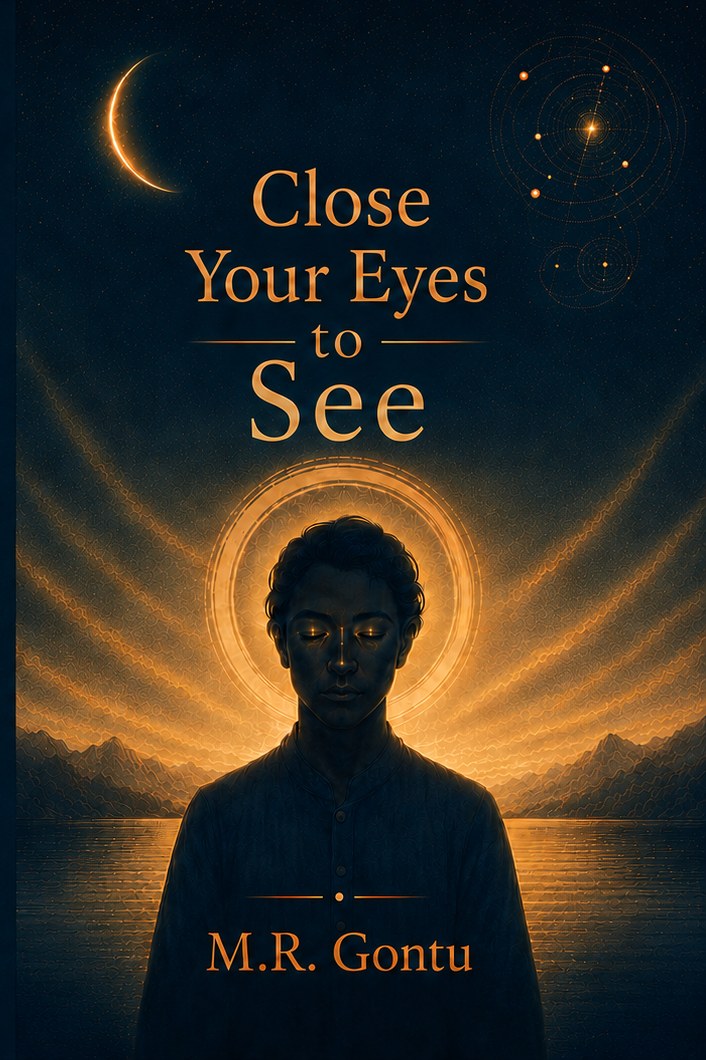
About the Book
A reflective journey across memory, temples, symbols, knowledge, and time
Some symbols survive for centuries. But do we still know how to see them? Across India's ancient temples — stone sanctums, silent figures, flowing water, mountains, serpents, and cosmic imagery — this book explores how civilizations preserve memory, meaning, and knowledge across fragile generations.
Because perhaps the stones were never silent. Perhaps we simply forgot how to listen.
This is not a book of final answers. It is an invitation to slow down, observe deeply, and reconsider what the past may still be asking us. It is a book about wonder. About memory. About the fragility of knowledge — and the possibility that some of the greatest truths are not hidden because they are concealed, but because we have forgotten how to look.
Inside the Book
Memory in Stone
How temple architecture and iconography may function as a deliberate medium of preservation — knowledge carried not in books, but in form, proportion, and symbol.
The Fragility of Knowledge
What happens when civilizations lose what they once knew — and why every era stands one interruption away from forgetting.
Learning to Look Again
An invitation to slow down and observe deeply: to approach the past not as a silent ruin, but as a message waiting for a patient reader.
Who This Book Is For
Readers drawn to the meeting point of history, philosophy, and symbolism. Travelers who have stood before an ancient structure and felt that it was saying something. Anyone curious about how knowledge survives — or fails to survive — the passage of generations.
Close Your Eyes to See asks for no prior expertise in Indian history or temple architecture. It asks only for patience, attention, and a willingness to sit with questions that do not resolve quickly.