The Official Site of M.R. Gontu

Close Your Eyes to See

What if the past was never silent?

Get the Book Read About It

The Book

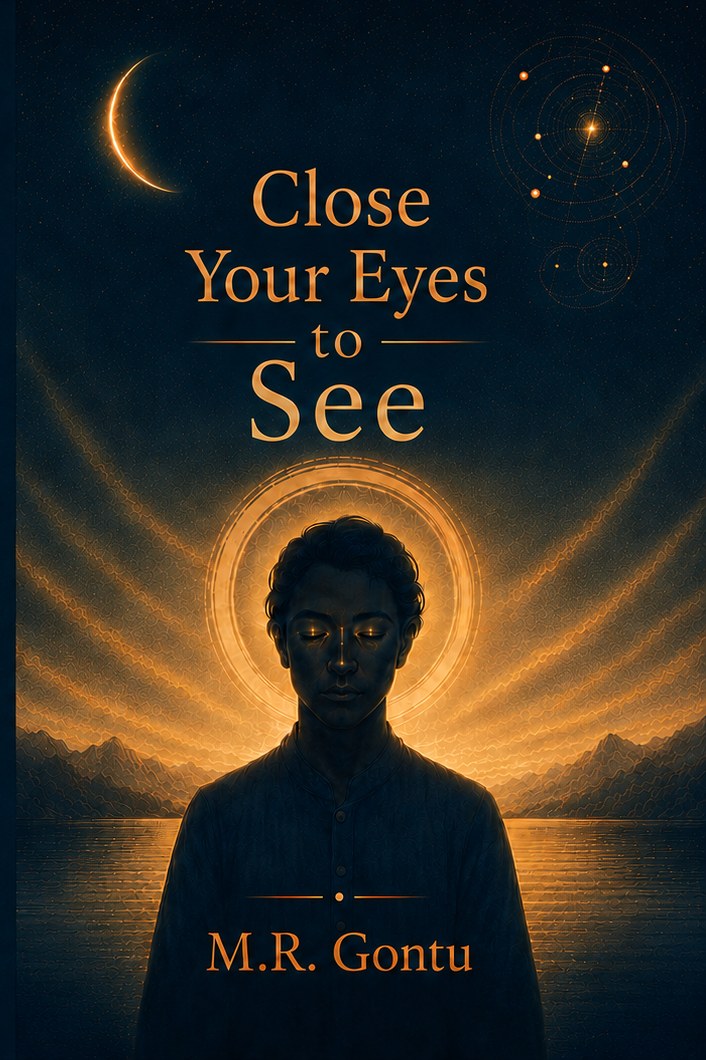
Close Your Eyes to See book cover — a figure with closed eyes haloed in amber light beneath a crescent moon

Close Your Eyes to See

What If the Past Was Never Silent?

Some symbols outlast the civilizations that made them. India's temples are covered in them — stone sanctums, silent figures, flowing water, mountains, serpents, wheels of cosmic time — cut with enormous care by people who seem to have expected someone, eventually, to read them.

Close Your Eyes to See asks what they were for. Not as a puzzle to be cracked, but as a question worth living with: how does a civilization hand down what it knows, when every generation it depends on is fragile? Books burn. Languages die. Stone keeps its appointment.

Because perhaps the stones were never silent. Perhaps we simply forgot how to listen.

This book argues nothing and concludes little. It is written for readers who would rather sit with a good question than be handed a quick answer — who suspect that some things go unseen not because they were hidden, but because no one slowed down long enough to look.

Format Paperback & Kindle · Kindle only in India ISBN 979-8-9913765-3-2 Genre Philosophy · History · Nonfiction

Inside the Book

Memory in Stone

Temple architecture and iconography read as a deliberate medium of preservation — knowledge carried not in books, but in form, proportion, and symbol.

The Fragility of Knowledge

What happens when a civilization loses what it once knew — and why every era stands one interruption away from forgetting.

Learning to Look Again

The past approached not as a silent ruin, but as a message that has been waiting, patiently, for a reader.

About the Author

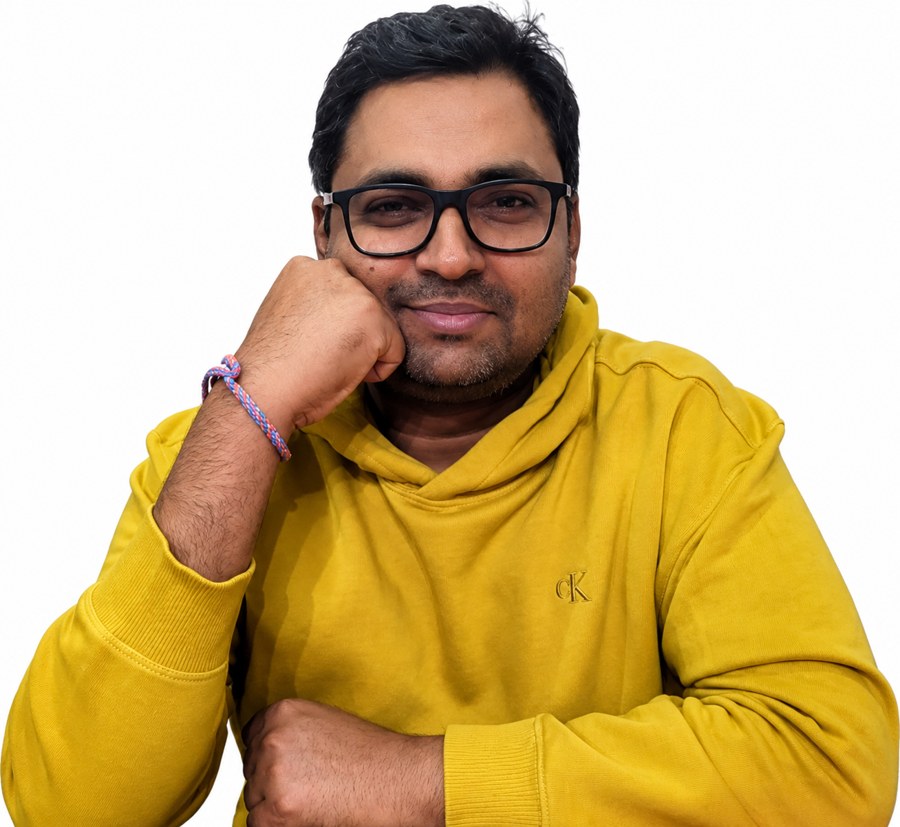
Portrait of author M.R. Gontu
M.R. Gontu

M.R. Gontu is a technology professional and writer based in Chicago. His work sits at the intersection of two lifelong fascinations: how modern systems store and transmit knowledge, and how ancient civilizations may have solved the same problem — in stone, symbol, and ritual — long before the written archive.

Close Your Eyes to See is the result of years of reading, travel, and quiet observation of India's temple traditions. Rather than presenting conclusions, the book models a way of looking: patient, curious, and willing to sit with questions that don't resolve quickly.

He lives with his family, who remain his first readers and his best critics.